
About us


Research has always been a key element of the Schola Cantorum Basiliensis since it was explicitly founded as an “Institute for Teaching and Research in the Field of Early Music” in 1933.

Today the Research Department consists of permanent staff members, supported by colleagues from the teaching staff, and of research fellows of the projects. An important aim is to connect our research with current issues related to historical performance practice and thus to inform teaching at the Schola Cantorum Basiliensis as well as to interact with the international community of musicology. These efforts are documented by numerous research projects and cooperations and are also aided by the scientific advisory board of the Schola Cantorum Basiliensis.
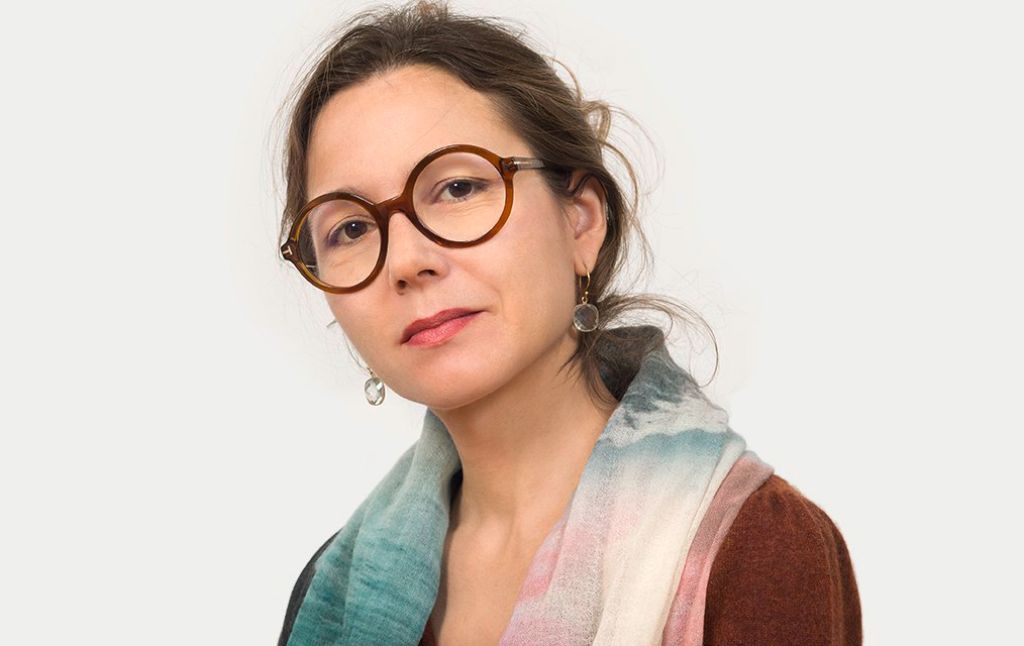
Christelle Cazaux

Christelle Cazaux


Senior research fellow
Lecturer in music history
Microfilm Archive of the SCB
Principal Investigator of "Carmina Burana Online"

+41 61 264 57 57
christelle.*cazaux@fhnw.*ch

Christelle Cazaux studied musicology, medieval and modern history, and auxiliary historical sciences at the École nationale des chartes and the École pratique des hautes études in Paris. In 1997, she graduated as an archiviste paléographe with a dissertation on music at the court of King Francis I of France. In 2006, she received her PhD in musicology with a dissertation on the so-called Turin Palimpsest, one of the earliest notated graduals and antiphoners from northern Italy.

From 2000 to 2008, she was curator in the Department of performing arts at the Bibliothèque nationale de France. Between 2007 and 2015, she taught musical palaeography at the École pratique des hautes études. From 2008 to 2017, she was assistant professor at the University of Poitiers and Centre d’études supérieures de civilisation médiévale (CNRS). Since September 2017, she has been a senior research fellow in the Research department of the Schola Cantorum Basiliensis / FHNW.

Her main research interests focus on Latin monophonic chant and the musical notations of the Early and High Middle Ages, with particular attention to the relationships between orality, literacy, music theory, and musical practice. Another major area of her research concerns musical life and the prosopography of musicians in the Early Renaissance.